
Room for Improvement: Assessing Bridget Phillipson’s First Major Speech to the Teaching Profession
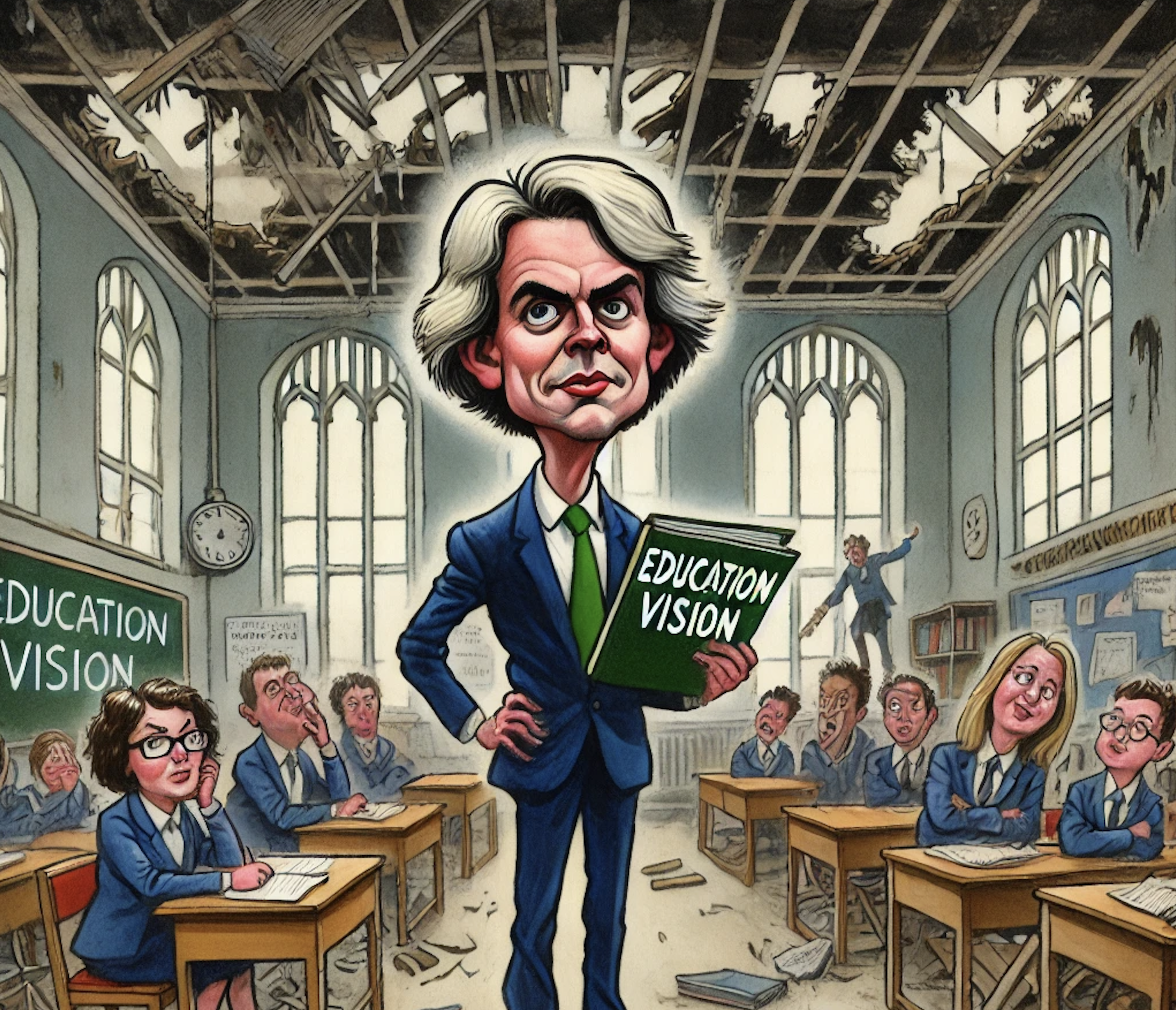
Room for Improvement: Assessing Bridget Phillipson’s First Major Speech to the Teaching Profession
Author: Tim Clark
Published: 11th November 2024
Bridget Phillipson’s Speech: Positive Vision or Missed Reality?
On Thursday, 7th November, Bridget Phillipson delivered her first major address to the education sector at the Confederation of School Trusts’ annual conference. The speech was personal, highly positive, and encouraging but showed hints of naivety and even a lack of realism in understanding core education issues.
A Promising Start from a Challenging Background
Phillipson began, as her predecessor Gillian Keegan often did, by sharing her journey from a disadvantaged background to becoming Secretary of State, a narrative to be applauded and respected. After all, what is the prime purpose of education other than to nurture, develop, and open doors for all, regardless of background? Her theme, “achieve and thrive,” set a hopeful tone.
Highlighting Inequality in Education: A Crucial Issue
Phillipson highlighted the stark inequality that persists in this country, noting that where you live and attend school still largely determines educational outcomes. This is clearly wrong, even immoral, in a modern, advanced nation: every child should be able to access a world-class education. She enthusiastically referenced Labour’s recent education initiatives, including the 5.5% pay rise for teachers and the £2.3 billion boost to core school funding, although much of this will be absorbed by pay rises and an unexpected hike in employers’ National Insurance contributions.
Valuing the Teaching Profession
Her attitude toward teachers is also commendable, noting that “Teachers are partners, not enemies.” She emphasised involving experienced professionals, rather than political aides with no teaching experience, to lead developments. However, I should have liked to see a broader engagement with the teaching profession. In my June 2023 report, “Better Schools, The Future of the Country,” I proposed creating a National Schools Council, a body that would regularly bring together ministers, civil servants, and school representatives to drive real improvement.
School Infrastructure: Let’s be honest
Phillipson promised to address “crumbling classrooms,” referencing recent Budget allocations, including an additional £550 million for rebuilding and £330 million for school maintenance. While promising, we must remember that the same issues of RAAC and asbestos existed during the previous Labour government. Instead of resolving them, funds went towards new architectural masterpieces, eye-catching for elections but neglecting deeper structural needs in all schools.
Curriculum and Assessment: A Promising Direction?
Early signs of reform are promising. A curriculum review could yield a more accessible curriculum that enables more young people to succeed and contribute to society. Changes to Ofsted inspections may make evaluations more accurate and useful for parents, schools, and government. Providing early SEND interventions and addressing high absence rates (one in five children is persistently absent) are critical areas requiring immediate focus.
Teacher Recruitment and Retention Crisis: The Stark Reality
However, two areas of the speech felt unrealistic. First, Phillipson’s plans for tackling the crisis in teacher recruitment and retention. She mentioned Labour’s goal of creating an additional 6,500 teachers, a number that barely scratches the surface. Last year, over 40,000 teachers (9% of the workforce) left the profession, while only half of new teacher training places were filled. With 20,000 schools in England, this equates to almost each and every school losing two teachers last year. More needs to be done to address this teacher shortage crisis and retain quality educators.
Balancing Standards with Student Wellbeing
Phillipson’s comments on standards and student happiness have sparked debate. She cited an OECD survey showing that one in three 15-year-olds “don’t feel happy in school.” Her message was that schools should look beyond academic achievement: “A*s alone do not set young people up for a healthy and happy life.” However, most schools are not solely focused on exam results. While academic success is a key to future opportunities, schools are also judged by annual examination performance tables, which Phillipson did not suggest scrapping. We cannot blame schools, therefore, for wanting to do well in public league tables.
Academic Standards and England’s Global Position
Phillipson’s speech also contained criticisms of previous governments: “A sole focus on achievement is doomed to fail.” However, Phillipson must acknowledge England’s current academic challenges. In recent years, England has performed well in international rankings (PISA and PIRLS), but our real-term performance in areas like maths has declined. Less than half of children now feel confident in reading, and less than a third entering secondary school enjoy reading. While making children safe and happy is essential, raising academic standards is urgent.
A Call for Action: Recognising the Real Needs in Education
Twenty years ago, at a conference on “Every Child Matters” (England) and “No Child Left Behind” (US), a speaker accidentally called for a system where “No child matters, and every child is left behind.” This slip emphasises the dangers of political point-scoring and unqualified decision-makers. For current and future education ministers, a few basic truths are crucial:
- The future of the country depends on how well we educate all young people, regardless of their background.
- A world-class education system requires investment.
- Education is complex: soundbites and “one-size-fits-all” solutions are ineffective.
- The teaching profession is the backbone of education and critical to student outcomes.
- Elected officials must actively engage with experienced educators, not rely on inexperienced advisors.
Achieving an education system where all young people can “achieve and thrive” is possible, but we have much work to do.
The Author: Tim Clark
Tim Clark is an experienced education consultant and former headmaster with over three decades in education. He has successfully led schools to excellence and now shares his expertise globally, advocating for educational reform and leadership development. Passionate about holistic student growth, Tim remains committed to improving education systems worldwide.