
In Support of Jonathan Gullis: The Struggles of Conservatives in Education
In Support of Jonathan Gullis: The Struggles of Conservatives in Education
Author: Stephen James.
Published: 1st October 2024
Original article published here: In Support of Jonathan Gullis: The Struggles of Conservatives in Education- www.stephenjamesgbr.co.uk
After representing Stoke-on-Trent North as part of the 2019 Conservative wave, Jonathan Gullis has faced challenges returning to the classroom after his loss of office. Despite his background as a passionate and experienced teacher, Gullis has struggled to secure even interviews for teaching roles, which he attributes to his Conservative affiliation. As someone who has also worked in the teaching profession, I share Gullis’ experience of feeling unwelcome in a sector that increasingly leans towards left-leaning political views, making it difficult for Conservatives to be accepted.
The Growing Left-Leaning Bias in Education
Gullis’ struggles are not isolated. Many right-leaning educators in the UK encounter similar roadblocks. Historically, the education profession has leaned towards the centre-left, but in recent years, this tilt has become more extreme. Political bias in schools is growing to the point where Conservatives often feel marginalised, regardless of their ability or qualifications. This kind of bias threatens to erode the foundations of a fair and balanced education system.
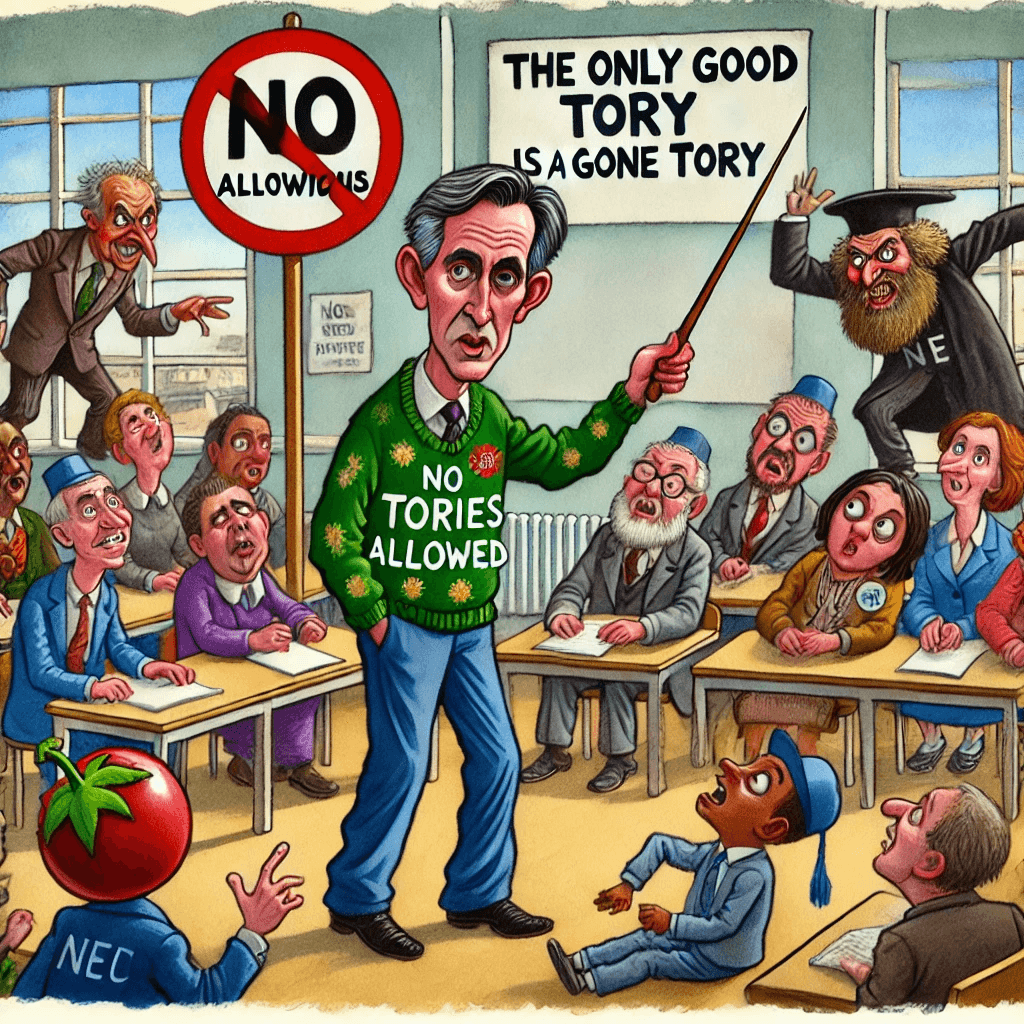
The case of Lucy Preston, a prominent figure in the recent National Education Union (NEU) strikes, is an alarming example of this bias. Preston was photographed in a classroom with a placard reading, “The only good Tory is a dead Tory”—a statement that has sparked outrage across the political spectrum. Preston’s actions have led to an investigation by both her school and the NEU, with many demanding her suspension or dismissal.
For a teacher to display such extreme views in a classroom, where impartiality is paramount, goes against the very ethos of what education should represent. Conservative MPs, including Jonathan Gullis, have rightly expressed concern, pointing out that such “hatred” towards a political group contradicts the principles of tolerance and respect. This incident underscores the growing political bias in education and highlights the challenges faced by those who hold right-leaning views in an environment that is increasingly intolerant of differing political opinions.
Political Discrimination in a Supposedly Neutral Profession
The education profession should prioritise merit, experience, and the ability to teach effectively. Yet, the challenges faced by Jonathan Gullis, alongside the extreme case of Lucy Preston, reveal that political bias often outweighs professional qualifications. The inability of Gullis—a former MP with teaching experience—to secure even an interview, suggests that political discrimination is creeping into hiring practices.
It is unacceptable that schools, institutions where young minds are shaped, would allow political leanings to determine who can teach. A diverse range of views is crucial for developing well-rounded, critically thinking students. Conservative educators, like Gullis, have valuable perspectives to offer, yet many are being sidelined because of their political beliefs.
Lucy Preston’s placard incident further illustrates the dangers of allowing political bias to influence teaching. The NEU has initiated an investigation, but the fact that such an extreme viewpoint was ever displayed in a classroom shows just how pervasive political bias has become in some areas of education. Schools are legally bound to maintain political impartiality, as set out by the Department for Education’s (DfE) guidelines, yet incidents like these raise serious concerns about whether these rules are being followed.
The Impact of Political Bias on the Future of Education
The growing political bias in the education system has serious long-term consequences. If Conservatives are increasingly excluded from teaching roles, schools will become dominated by a narrow ideological group, limiting the diversity of ideas students are exposed to. This lack of diversity in the classroom does a disservice to students, who need balanced perspectives to develop critical thinking skills and understand the complexity of the world around them.
If we continue down this path, where educators like Jonathan Gullis and others with conservative values are sidelined, the entire education system risks becoming an echo chamber for a single set of political beliefs. Political discrimination in education is dangerous because it limits students’ exposure to diverse viewpoints and ideas. Educators should present multiple perspectives to students, allowing them to form their own opinions. When political bias dominates, it hampers students’ ability to engage in independent thinking.
The Lucy Preston incident is a stark reminder of how far political bias has infiltrated the classroom. A teacher posing with a placard inciting violence against a political group undermines the very principles of democracy, tolerance, and mutual respect. Such behaviour should never be tolerated in schools, and it raises questions about the effectiveness of impartiality guidance currently in place.
Standing Up for Conservative Voices in Education
Jonathan Gullis’ experience, and the recent controversies surrounding Lucy Preston, highlight the difficulties faced by Conservatives in the education profession. It is clear that political bias has become a serious issue, with Conservatives often feeling marginalised or excluded. The disdain with which Conservative values are treated in some schools is not only unfair to the teachers affected but detrimental to students who are denied access to a variety of viewpoints.
It is crucial that we stand up for Conservative voices in education. Free speech, diversity of thought, and the value of individual merit are all principles that should be upheld within the education system. Schools should judge teachers on their ability to educate and inspire students, not their political affiliations. Ensuring that Conservative voices are not silenced will create a more balanced, inclusive education system that benefits all students.
Jonathan Gullis deserves our support for raising awareness of this issue. The bias he has faced in his attempts to return to teaching is not just a personal struggle but reflects the broader challenges that many right-leaning educators face. The Lucy Preston case further exemplifies the need for stronger safeguards to ensure impartiality in schools. We must ensure that teaching remains a profession open to all qualified individuals, regardless of political beliefs, for the sake of our children’s future.
SJ
FAQs
What is the political bias in education that Jonathan Gullis has raised?
Jonathan Gullis has highlighted the growing bias against Conservatives in education, where political affiliation can affect hiring decisions and professional opportunities.
Why is Lucy Preston’s case significant?
Lucy Preston, a teacher, was photographed holding a placard with violent language against Conservatives, highlighting the extreme bias present in some areas of education. This incident has sparked an investigation and raised concerns about political impartiality in schools.
How does political bias affect the quality of education?
Political bias in schools limits the diversity of viewpoints that students are exposed to, leading to a narrow, one-sided education. It undermines students’ ability to think critically and engage with multiple perspectives.
What can be done to address political bias in education?
Promoting impartiality in hiring practices, upholding DfE guidelines, and ensuring that teachers present balanced viewpoints are key steps to address political bias in education.
Why is political diversity important in schools?
Political diversity in the classroom ensures that students receive a well-rounded education and are exposed to a range of ideas, fostering critical thinking and independent thought.
How can we support Conservative voices in education?
Raising awareness of political bias, promoting free speech, and ensuring schools adhere to impartiality guidelines will help support Conservative educators and create a more balanced education system.
The Author: Stephen James
Stephen James is an award-winning teacher, specialist leader of education, and founder of Conservative Friends of Education, as well as Folkestone & Hythe Conservative Association chairman.