
Labour’s Broken Promise on Tuition Fees: A Teacher’s Perspective on Student Debt and Political Integrity
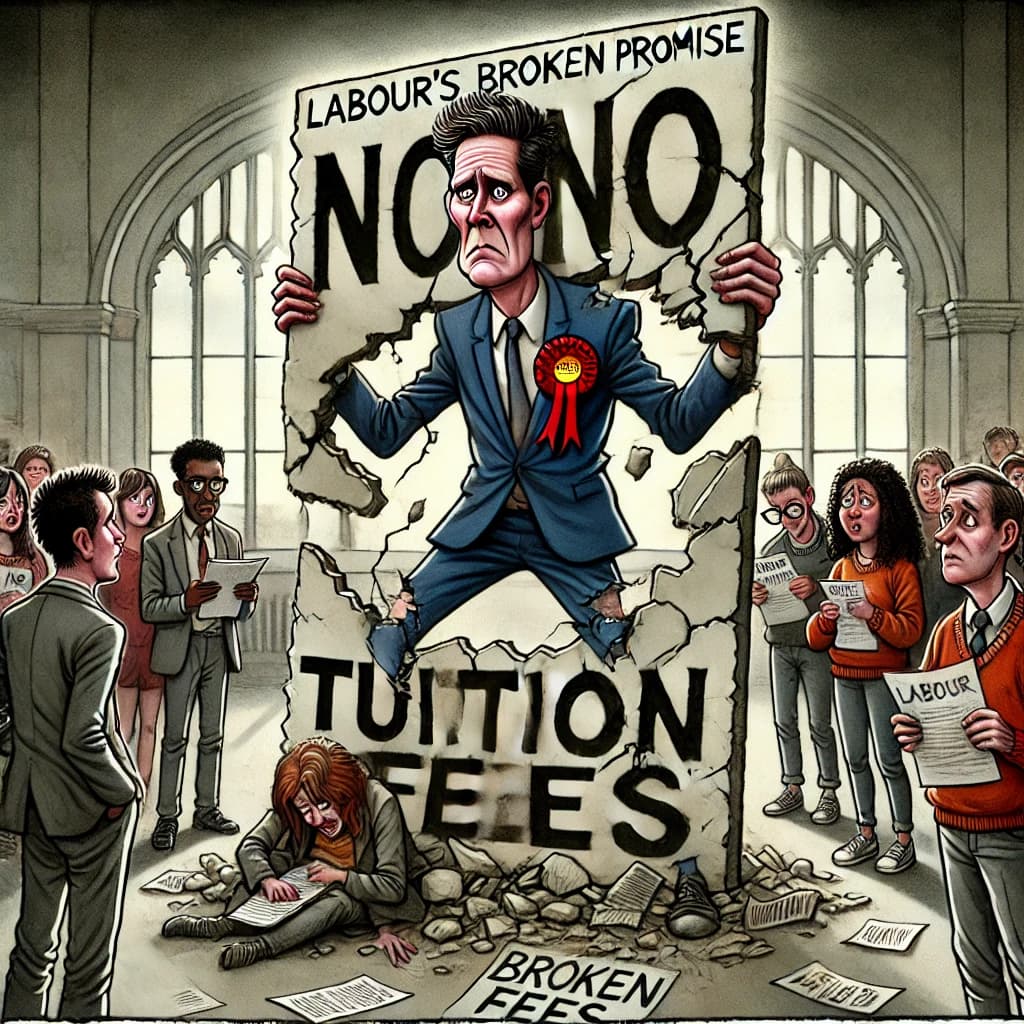
Labour's Broken Promise on Tuition Fees: A Teacher's Perspective on Student Debt and Political Integrity
Author: Stephen James.
Published: 5th November 2024
Education is a cornerstone of opportunity--a means to empower young people, foster dreams, and open doors to the future. As a teacher who has witnessed this transformative power first-hand, I firmly believe education should be free of misleading promises and grounded in honesty. That's why I'm profoundly disappointed with Labour's broken promise on tuition fees. After years of positioning themselves as champions against rising education costs, Labour's decision to backtrack on this commitment feels like a betrayal of trust that could have a lasting impact on students and their aspirations.
Labour's Longstanding Stance on Tuition Fees
For many years, Labour has gained significant support by pledging to reduce or abolish tuition fees, especially targeting students from disadvantaged backgrounds. They've painted themselves as the party willing to ease financial burdens, repeatedly championing an education system that would not leave students grappling with debt. However, recent policy shifts have shown Labour moving away from this stance under Sir Keir Starmer's leadership. Their commitment has waned, with current rhetoric suggesting a vague "review" of the system rather than the decisive action that students were promised.
The Impact of Labour's Broken Promise on Students
Labour's recent shift on tuition fees leaves many students feeling betrayed. They had trusted the party to lessen financial barriers and improve access to higher education. For families across Britain, tuition fees are far more than a financial consideration; they represent significant emotional stress and often deter young people from pursuing university degrees.
From my perspective in the classroom, this issue is personal. Students frequently express their worries about future debt, particularly those from lower-income families. The prospect of graduating with substantial financial burdens is daunting, affecting not just their aspirations but also their faith in political leaders who claim to support their future. This isn't just about the numbers; it's about broken trust, dashed hopes, and missed opportunities that could shape the lives of young people for years to come.
Why Labour's Excuses Don't Hold Up
Labour's assertion that eliminating tuition fees is "too expensive" does little to soothe the disappointment of students who feel abandoned by the party's promises. Claiming financial strain as a justification for abandoning this pledge feels disingenuous, especially when there are other avenues to support education reform without excessive spending.
In contrast, the Conservative approach has been more measured, focusing on building sustainable pathways to education and employment. By emphasising apprenticeships, vocational training, and employment opportunities that don't rely on university degrees, Conservatives are providing young people with viable, debt-free alternatives that align with today's job market. This approach recognises that not every career path requires a university education, ensuring that students have options that reflect their ambitions without the looming burden of student debt.
A Conservative Call for Transparency and Realism in Education
As Conservatives, we have consistently advocated for policies rooted in realism and transparency rather than making unattainable promises. Our focus remains on equipping students with the knowledge and skills to succeed, whether through traditional education, vocational training, or apprenticeships. Unlike Labour's shifting stance, our approach does not hinge on populist pledges but on a commitment to genuinely support young people as they step into the future.
Instead of using tuition fees as a political bargaining tool, we prioritise long-term stability and pragmatic solutions. Labour's inconsistency on tuition fees exemplifies a broader issue within their leadership: a willingness to say whatever will gain votes, regardless of the impact on the young people they profess to support.
The Reality of Student Debt in Today's Britain
For today's students, the cost of university education is significant. Tuition fees, combined with living expenses, create financial burdens that many will struggle to repay. Studies consistently show that student debt impacts graduates' mental health, career choices, and long-term financial stability. With student loan interest rates rising, graduates are increasingly finding it difficult to pay off their loans--often resulting in decades of debt repayment.
While Labour initially promised to address this problem head-on, they now suggest only a "review" of tuition fees--a move that leaves students in a precarious position, with no clear pathway to relief. Conservatives, on the other hand, recognise the importance of alternative education routes. By promoting apprenticeships and other career pathways, we're helping students access training that equips them for the workforce without plunging them into debt.
Conclusion: A Need for Genuine Commitment in Education
As a teacher and a Conservative, I am committed to ensuring that my students have faith in their futures and confidence in the promises made to them. Labour's broken promise on tuition fees has left many questioning the party's commitment to young people and the values of honesty and integrity. In the classroom, I emphasise to my students the importance of keeping one's word. Political parties, especially those claiming to represent the underprivileged, should do the same.
If we want a future where students can pursue their dreams without the crippling weight of debt, we must focus on sustainable, truthful policies. Labour may have disappointed our students, but as Conservatives, we are determined to continue supporting initiatives that open doors--without the burden of debt or empty promises.
SJ
FAQs
Why did Labour change its stance on tuition fees?
Labour claims that removing tuition fees is now financially unfeasible, though many believe this reasoning is more about political convenience than fiscal responsibility.
How does student debt impact young people in the UK?
Student debt can restrict graduates' career choices, delay major life decisions, and significantly impact mental well-being, making financial stability difficult for years post-graduation.
What alternatives do Conservatives propose to reduce student debt?
Conservatives promote vocational training, apprenticeships, and direct pathways into the workforce as debt-free alternatives to traditional university degrees.
Why is tuition fee reform important for students from disadvantaged backgrounds?
High tuition fees deter many talented young people from attending university, especially those from low-income backgrounds, making it an issue of educational equality.
How can students benefit from apprenticeships?
Apprenticeships provide practical skills and paid work experience, allowing young people to start their careers without incurring debt.
What should political parties do to restore trust among students?
Political leaders must commit to transparent, realistic policies that genuinely support young people, avoiding promises that only serve as campaign tactics.
The Author: Stephen James
Stephen James is an award-winning teacher, specialist leader of education, and founder of Conservative Friends of Education, as well as Folkestone & Hythe Conservative Association chairman.